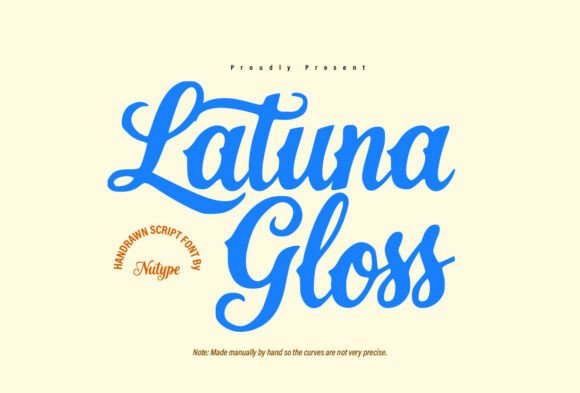
Latuna Gloss: A Script Typeface for Digital Design
Latuna Gloss is a script typeface with hand-drawn strokes that give it a natural look, making it an essential addition to your library of Fonts for modern web projects. As digital creators, we constantly search for typography that bridges the gap between human warmth and pixel-perfect precision. This Script Handwritten style offers exactly that balance, providing a visual voice that feels personal yet professional. When integrating this typeface into user interfaces, landing pages, or brand identities, the goal is to enhance readability while establishing a distinct emotional tone. The organic flow of the letters helps break the monotony of standard sans-serif grids, drawing the eye to key messages without sacrificing clarity.
Enhancing Brand Identity with Latuna Gloss in Web Headers
Incorporating Latuna Gloss into your web design strategy begins with understanding its role in visual hierarchy. As a Script Handwritten font, it commands attention, making it ideal for hero sections and primary headings on landing pages. When users arrive at a site, their scanning behavior is influenced by contrast and familiarity. Using Fonts like Latuna Gloss for main titles creates an immediate connection, suggesting a brand that values craftsmanship and authenticity. For instance, a boutique online store selling handmade ceramics can use this typeface in its header to convey artisanal quality. The hand-drawn strokes resonate with the product’s nature, reinforcing the brand story before the user even scrolls down. However, restraint is crucial; overusing script fonts can clutter the interface. Reserve Latuna Gloss for high-impact areas where you want to evoke emotion or highlight a unique value proposition.
Optimizing Readability and Visual Hierarchy in UI Design
Readability in digital environments is non-negotiable, and Latuna Gloss performs best when treated as a display element rather than body copy. As one of many Fonts available to designers, its strength lies in short phrases, logos, and call-to-action accents. The Script Handwritten characteristics include varying stroke widths and natural connections between letters, which can become difficult to decipher at small sizes. To maintain usability, ensure that Latuna Gloss is used at larger point sizes, typically above 24px for web headers. On mobile screens, test the legibility carefully, as reduced screen real estate can compress these intricate details. Pairing this script with a clean, neutral sans-serif font for body text creates a balanced layout. This contrast allows the eye to rest on the simple text while being drawn to the decorative flair of Latuna Gloss. By managing line height and letter spacing appropriately, you prevent the handwritten elements from feeling cramped, ensuring a smooth reading experience across devices.
Leveraging Alternates and Ligatures for Custom Branding
A standout feature of Latuna Gloss is its inclusion of alternates and ligatures, which are powerful tools for creating unique brand assets. In the realm of Fonts, these OpenType features allow designers to customize the appearance of specific letter combinations, avoiding repetitive patterns that can make script typefaces look artificial. For a Script Handwritten style to feel genuine, it must mimic the unpredictability of human handwriting. By swapping out standard glyphs for alternates, you can create bespoke logos or signature-style graphics for social media banners and email headers. This level of customization is particularly valuable for coaches, consultants, and creative entrepreneurs who rely on personal branding. Using these ligatures in digital ads ensures that your visual identity remains consistent and distinctive. It transforms a standard typeface into a tailored design element that competitors cannot easily replicate, adding significant value to your overall brand kit.
Effective Font Pairing Strategies for Digital Products
Selecting the right companion typeface is critical when working with Latuna Gloss. Since this Script Handwritten font carries significant visual weight, it pairs best with minimalist Fonts that do not compete for attention. A geometric sans-serif works well for tech startups or SaaS platforms aiming to soften their corporate image with a touch of humanity. Conversely, pairing Latuna Gloss with a classic serif can create an editorial, high-end aesthetic suitable for fashion blogs or luxury e-commerce sites. The key is contrast in structure: the fluid, organic curves of Latuna Gloss should be anchored by the rigid, stable lines of its partner font. This dynamic creates a clear visual hierarchy, guiding the user’s eye through the content logically. When designing course sales pages or portfolio sites, use the script font for testimonials or section dividers to add personality, while keeping navigation and informational text in the paired sans-serif or serif. This approach maintains professionalism while injecting character into the user experience.
Implementing Latuna Gloss in Conversion-Focused Layouts
For marketers and conversion-focused designers, Latuna Gloss serves as a strategic tool to highlight offers and build trust. In Script Handwritten applications, the perception of authenticity can significantly impact user engagement. When used in limited quantities on landing pages, such as in a limited-time offer banner or a founder’s note, it adds a human touch that static, mechanical fonts lack. Among various Fonts, Latuna Gloss stands out for its ability to convey warmth and approachability. This is particularly effective for service-based businesses, such as wedding planners or lifestyle coaches, where the relationship with the client is paramount. Ensure that the color contrast between the script text and the background is sufficient to meet accessibility standards. Dark backgrounds with light script text can look elegant, but only if the stroke thickness is adequate. Always test your layouts on multiple devices to ensure that the delicate ends of the hand-drawn strokes remain visible and sharp, preserving the integrity of the design and maximizing conversion potential.